
Key Takeaways

Care under pressure: What are the biggest challenges facing care providers?
The care sector is facing a structural challenge: staff shortages, limited financial resources, and an ever-increasing need for care characterize the day-to-day operations of many care providers. At the same time, the demand for high-quality care is steadily rising.
Initiatives such as integration with telematics infrastructure promise to ease the burden. However, their implementation initially requires investment, time, and personnel resources. In many places, there is not enough time to proactively develop necessary processes because care providers must primarily respond to urgent demands in their day-to-day operations.
This tension is also evident in admissions and occupancy management. Although the demand for care beds is growing, providers are often unable to admit new clients – even when beds are available. There is a shortage of caregivers or the necessary financial resources to handle additional admissions. The key challenge lies in striking the right balance between quality and quantity – using the staff and financial resources that are available. Technology can be a key lever in this regard: It streamlines processes, deploys existing resources more effectively, and creates new opportunities for action.
„ Caregivers need a moment to catch their breath so they can truly take an active role in providing care.”
- Dylan Hayward
What care needs today: Integrated systems, not isolated solutions
To meet the challenges in care, care providers have access to numerous digital solutions today. The problem, however, lies less in the availability of these solutions than in how they interact with one another: Additional work arises when applications cannot communicate with each other and information must be entered multiple times.
A single system is unlikely to be able to cover all processes – from admission and daily care documentation to billing. This makes it even more important that specialized applications do not operate in isolation but reliably exchange information. Just as reliable care requires collaboration among all stakeholders, digital systems must also be closely interconnected. Typically, a primary system serves as the central foundation. Digital assistants like myneva.caremates complement it in a targeted manner, if they are seamlessly integrated. For example, existing client data can be used to check for duplicates, or current occupancy information can be imported directly from the primary system.
The main advantage of integrated systems lies in end-to-end processes: data does not need to be entered multiple times, transferred manually, or maintained in different locations. This reduces data discontinuities, lowers administrative overhead, and creates a more reliable data foundation for daily work.
“It takes a village to raise a child – and the same is true in care: It takes a village to care for a loved one. That’s why everyone involved and the digital systems must be closely interconnected.”
- Dylan Hayward
How does myneva.caremates simplify the admission process?
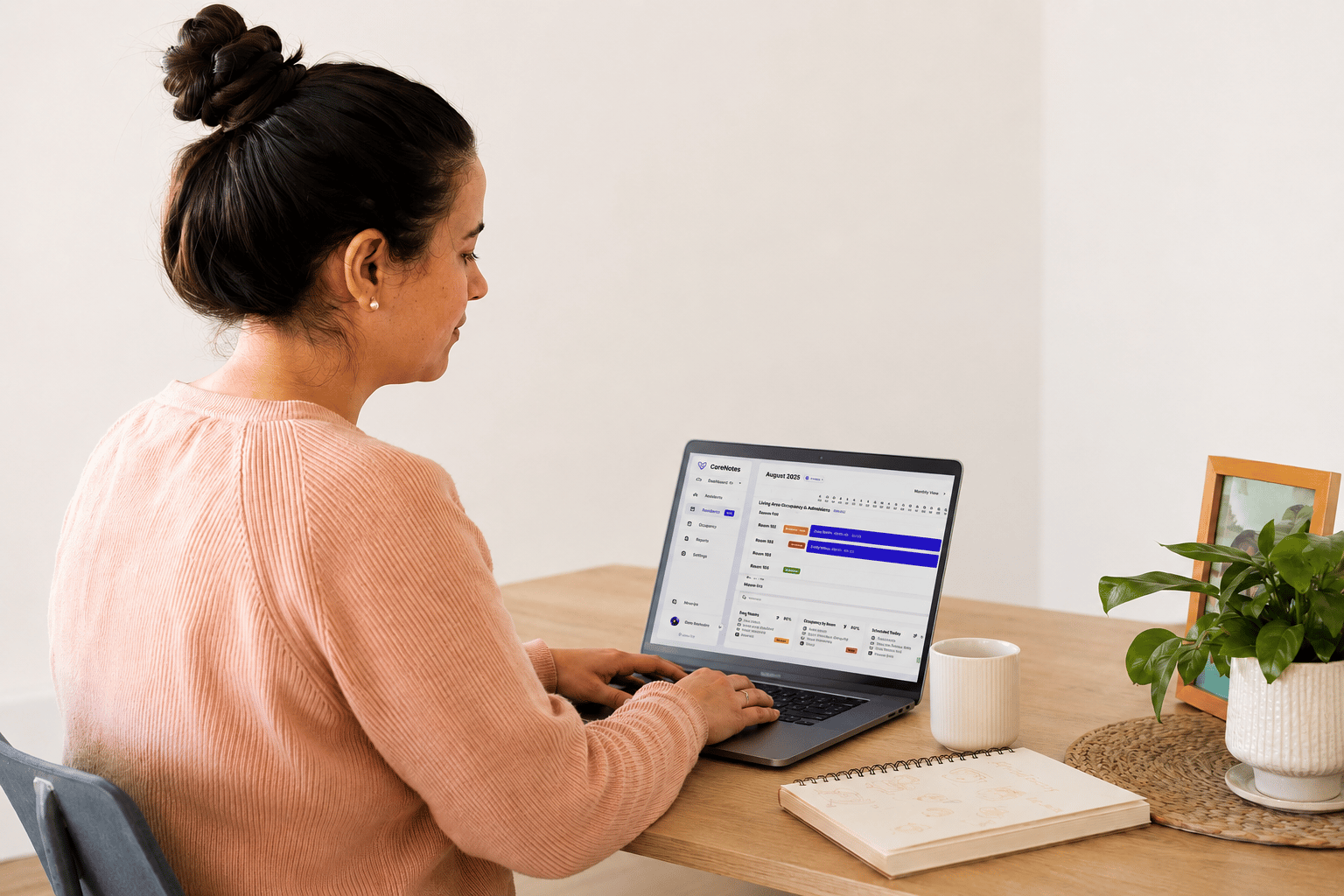
A great deal of time is often still lost due to manual processes, particularly during the admission and occupancy process. Administrative staff take inquiries over the phone, record master data on paper, and maintain waiting lists by hand. When a spot becomes available, they must search for suitable applicants, recheck information, and schedule follow-up appointments. This is followed by a care assessment, action planning, and the preparation of contract documents. The entire process can take up to five hours.
myneva.caremates consolidates these steps into a modern system. Digital forms, automated waiting list emails, and intelligent follow-up prompts expedite the process. In addition, AI support generates suggestions for the care assessment and care plan, while contract documents can be automatically prepared and digitally signed.
This reduces the time required for an admission from up to five hours to about one hour. At the same time, it creates a more comprehensive data foundation. Care providers can determine earlier whether the care level, care needs, financing, and available capacity are a good fit – and can thus make more informed admission decisions. This noticeably reduces the workload on staff, giving them more time to provide personalized care to clients.
Which new features make the admission process easier?
Closely aligned with user needs, myneva.caremates is constantly evolving. Three new add-on modules significantly improve the admission process:
- Mobile application with AI-assisted speech recognition:
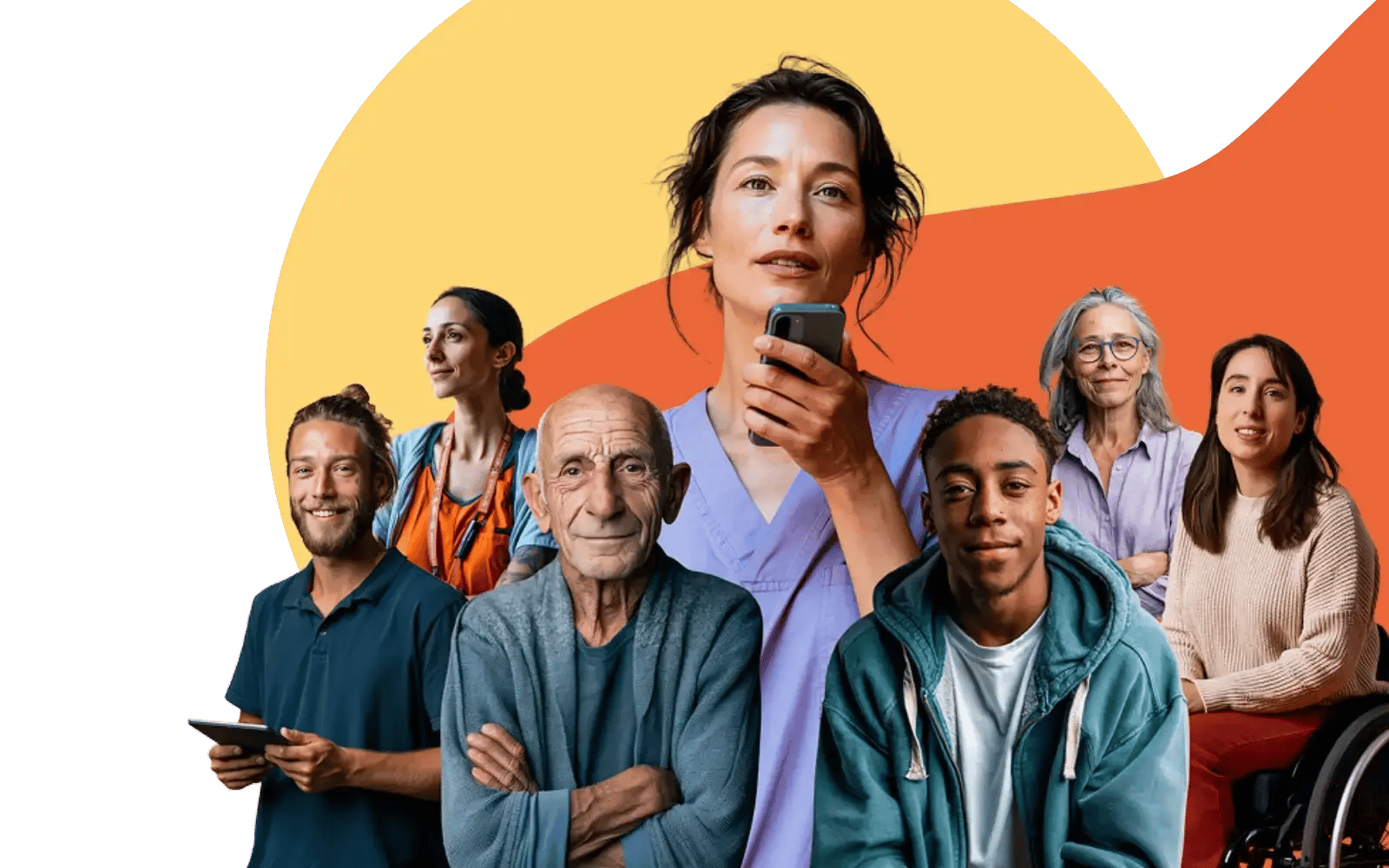
During a home visit, the caregiver conducts the initial consultation without having to take notes. myneva.caremates transcribes the conversation, identifies details such as personal information, health status, and care needs, and uses this information to create an inquiry directly in the software. The information is assigned to the appropriate fields and then used for the care history and the care plan. - Digital Signature:
Based on the data already captured, admission documents can be generated automatically. They can then be sent digitally and signed in a legally compliant manner. Examples include the care contract and the SEPA direct debit mandate. myneva.caremates records when each document was signed and by whom. Upon export, the documents are stored in the designated location in the primary system.
- myneva.caremates analytics:
The data generated during the admission and occupancy process is systematically made available for controlling and reporting. Care providers can see which channels inquiries come from, which regions they originate in, and how well individual forms convert. For example, this makes it possible to identify at which points prospective clients drop off or how the introduction of required fields affects the completion rate. Regional trends and the most popular services become apparent. This enables larger providers to refine their offerings in a more targeted manner and tailor their services to actual demand in their specific sector.
“I think it would be great if the day-to-day work of care professionals consisted 100 percent of care and human interaction.”
- Dylan Hayward
What will the future of admissions and occupancy management look like?
In the age of AI and humanoid robots, it’s clear just how rapidly digitalization is advancing. But just because it would be technically possible for robots to provide care for people doesn’t mean that using them makes sense. A key factor in digitalization is a clear understanding of which processes in care should be digitized – and which must remain in human hands.
In an ideal future, digital assistants will handle administrative tasks in the background that currently take up valuable time for caregivers – from data entry and documentation to coordinating inquiries. Face-to-face conversations and professional assessments will remain indispensable, and the warmth of a human touch will never be replaced by a robot, even in the future.
Furthermore, the focus in the future should not be limited to reducing the workload on professionals. Family members must also be given greater consideration. The search for care places remains time-consuming: numerous care providers must be contacted, and the same information must be provided multiple times. Added to this are long wait times and often little transparency regarding the status of an admission.
The search for care facilities in the future must be more streamlined: with a centralized overview of suitable options, transparent capacity information, and the ability to enter data once and use it for multiple admissions. Well-connected digital solutions thus lay the foundation for sustainable care in which people are once again at the center.
Want to learn more?
Register now for free for the European Care Summit and discover how myneva.caremates and other AI-supported digital assistants are shaping the future of care.

.webp?width=800&height=600&name=woman-speaks-into-phone-1%20(1).webp)